
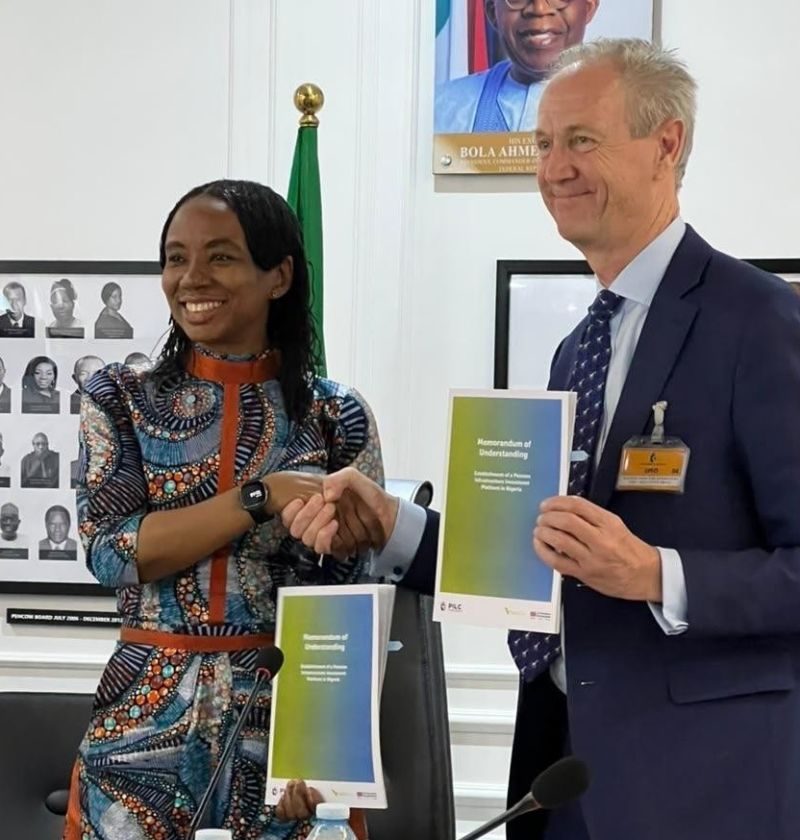
The partnership will support a new investment platform to finance energy, transport and digital infrastructure, and has already attracted interest from 19 Nigerian pension funds.
Nigeria’s Pension Industry Leadership Council (PILC) and UK-funded specialist development agency FSD Africa have signed an agreement to support the development of a proposed US$750 million infrastructure fund.
The fund aims to bring together capital from Nigerian pension funds and development finance to invest in infrastructure projects in Nigeria and selected markets across the region, providing long-term financing for projects that improve connectivity, help businesses grow and support Nigeria’s wider economic development. The partnership reflects a shared ambition to deepen Nigeria’s capital markets, mobilise more domestic investment and channel long-term capital into the real economy.
The proposed platform is targeting an initial capital mobilisation of US$350 million by its first close,expected in 2027,before scaling to US$750 million. At its final target size, it aims to mobilise approximately US$600 million from Nigerian pension funds and at least US$150 million from development finance institutions (DFIs).
Under the agreement, FSD Africa will provide the PILC with expert advice and technical support to help set up the fund. This will include helping to select a fund manager through a competitive process, engaging potential investors and DFIs, building capacity and supporting necessary regulatory reforms.
Developed by Nigerian Pension Fund Administrators (PFAs), with support from the National Pension Commission (PenCom) and FSD Africa, the initiative has attracted interest from 19 Nigerian pension funds, signalling strong appetite to put more long-term domestic capital to work in infrastructure.
Omolola Oloworaran, who chairs the PILC and is Director General of PenCom, welcomed the proposed platform and described its timing and ambition as ideal. She said the pension industry holds the country’s largest pool of long-term savings capital and is committed to mobilising it to deepen infrastructure development while safeguarding the retirement savings of contributors. The MoU, she said, is the first step the industry is taking and only the beginning.
The MoU signing comes amid growing demand for infrastructure investment across Nigeria and the wider region, particularly in energy, transport and digital connectivity. An initial assessment of Nigeria’s infrastructure pipeline identified 39 projects with potential relevance to the platform, representing approximately US$20 billion in investment needs.
The platform aims to help connect these opportunities with long-term institutional capital, investing in equity and quasi-equity, with at least 60 per cent of its portfolio allocated to projects in Nigeria and the remainder available for selected regional investments.
It is planned to comprise a naira-denominated core investment fund and a separate co-investment vehicle, allowing participating pension funds to invest alongside the core fund in selected projects. A parallel foreign-currency vehicle may also be established to accommodate international investors. The structure is designed to give institutional investors access to professionally managed, long-term investment opportunities while helping to finance infrastructure that supports economic growth.
Mark Napier, FSD Africa’s chief executive, described the planned investment structure as one with great promise for Nigeria and Africa. FSD Africa has observed for several years “the paradox of Africa having significant institutional capital” alongside big infrastructure funding deficits, Napier said, and is keen to work with PenCom and Nigeria’s pension industry to unlock the capital they manage towards Nigeria’s priority infrastructure.
Established in 2025, the PILC is an industry-wide platform bringing together PenCom, pension operators and key stakeholders to advance the growth, sustainability and transformation of Nigeria’s pension industry. Its aims include mobilising pension assets for productive investment and enhancing retirement security.