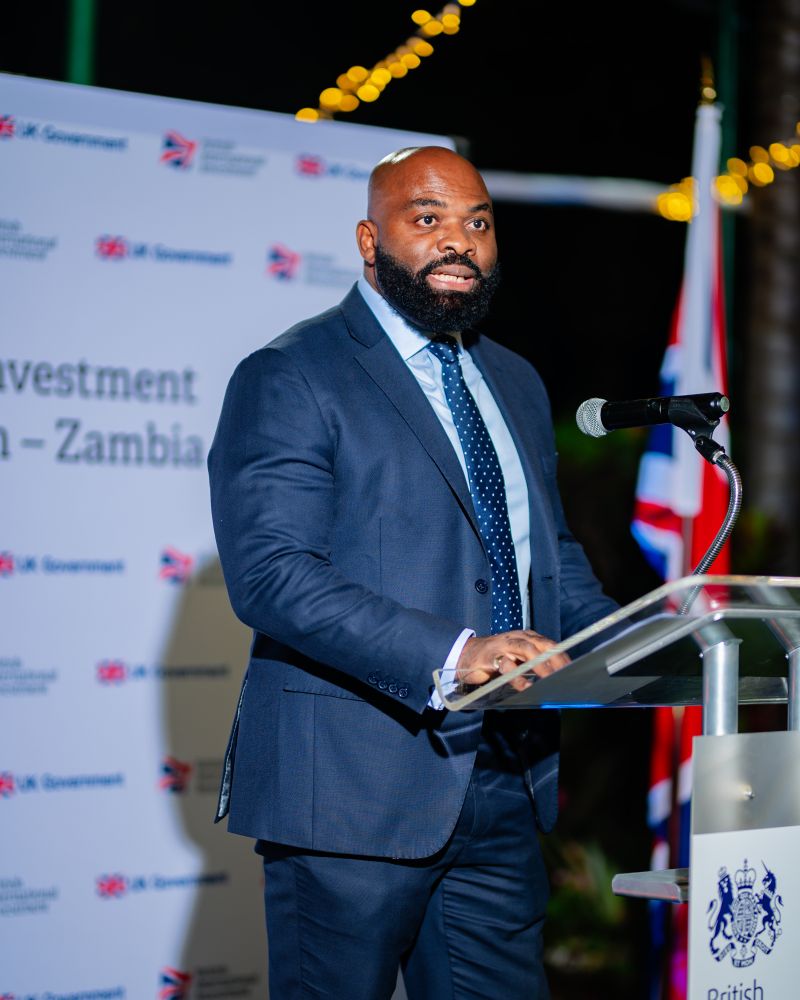
An anchor commitment to Zambia’s first bank-issued sustainability bond and a $50 million agriculture facility in Zimbabwe mark the launch of BII’s new five-year strategy in Zambia.
British International Investment (BII), the UK’s development finance institution and impact investor, is committing $65 million across Zambia and Zimbabwe to unlock investment in frontier markets. The package was announced as part of the local launch of BII’s new five-year strategy in Zambia, and it combines innovative financing with technical assistance and support for local financial institutions.
Together, the investments target the barriers that limit business growth, trade and investment. Across both markets, BII is using its capital to strengthen financial institutions, build local capital markets and mobilise private investment into productive sectors, including climate and agriculture.
“Our investments in Zambia and Zimbabwe demonstrate how we are putting our new strategy into action in frontier markets. Through partnerships with local financial institutions and targeted technical assistance, we are expanding access to long-term finance, strengthening capital markets and helping businesses invest, trade and grow. By doing so, we aim to create the conditions for more private capital to follow.” Chris Chijiutomi, Managing Director and Head of Africa at BII
BII is anchoring Zanaco’s debut $100 million Sustainability Bond Programme with a $15 million commitment, supporting the delivery of Zambia’s first bank-issued sustainability bond to demonstrate how domestic capital markets can mobilize investment into projects with positive environmental and social impact. In late September, Zambia National Commercial Bank PLC (Zanaco) issued a $50 million first tranche under its $100 million Medium-Term Note Programme, marking the inaugural bank-issued sustainability bond in Zambia.
Funds raised through the programme will support climate-resilient agriculture, renewable energy, SMEs, women-owned businesses and critical social infrastructure. Around 40 per cent of the capital is expected to come from non-DFI investors, which should help deepen confidence in Zambia’s sustainable finance market.
Since 2023, BII has worked with Zanaco to develop the programme, providing technical assistance and expertise to strengthen the bank’s sustainable finance framework, build its green financing pipeline and enhance environmental and social standards.
In Zimbabwe, BII is providing a combined $50 million facility to Central Africa Building Society (CABS) and NMB Bank under its Zimbabwe Agriculture Finance Programme, which is designed to address structural financing gaps in the country’s agriculture sector.
Agriculture is a critical driver of jobs, exports and food security in Zimbabwe, yet many businesses struggle to access the long-term capital and trade finance needed to invest, grow and participate in international trade. By combining long-term lending with trade finance, the programme will help businesses invest in productive assets, import essential equipment and inputs, and unlock growth across the agricultural value chain.
The programme pairs a long-term loan facility and trade finance with technical assistance to strengthen environmental, social and climate risk management within Zimbabwe’s banking sector. Together, the transactions are intended to support local financial institutions, improve access to finance and demonstrate the investment potential of frontier markets such as Zimbabwe.
BII is also introducing Horizon Zambia, a country-focused programme with technical assistance to address wider market constraints and strengthen the investment ecosystem. It will help businesses become investment-ready and support investors to identify opportunities, through a combination of technical assistance, policy engagement and strategic partnerships.
The programme builds on a pilot launched in 2025 that supported 15 SMEs and helped facilitate investments worth $8 million. It forms part of BII’s wider Horizon platform, which includes country programmes in Sierra Leone, Nepal and Ghana, alongside the Africa Resilience Investment Accelerator (ARIA), a pipeline-building initiative operating across multiple frontier markets.
UK Minister for International Development Kirsty McNeill described BII as an example of the UK shifting from donor to investor, using its capital and expertise to unlock opportunities that can attract further private investment.
You may also like
-
The African Local Currency Bond Fund Anchors Angola’s First Sustainability Bond Issuance
-
ALCB Fund Invests in Swami Agri’s Debut Bond, First Agricultural Green Bond in WAEMU
-
Cascador and Sterling Bank Announce $200M SME Credit Backstop Fund, a Catalytic Vehicle to Expand Capital for Growth-Stage Nigerian SMEs
-
MacArthur Foundation lifts its impact investing pool to $750 million, up 50%
-
I&P Ecosystems Secures C3 Funding to Convert African LP Interest into Fund Commitments