Shell Foundation has made a cornerstone investment in the Lendable Transportation and Energy Fund (LTEF). Shell Foundation’s investment anchors LTEF which reached a $135 million first close in December 2025 and is targeting a $200 million final close by mid-2027. LTEF aims to mobilise private investment for climate action and gender impact by expanding access to finance for underserved enterprises in emerging and frontier markets.
The commitment is funded by Shell Foundation and the UK government’s Foreign, Commonwealth & Development Office (FCDO), through the Transforming Energy Access (TEA) platform and the Catalysing Agriculture by Scaling Energy Ecosystems (CASEE) programme under the Global Research and Technology Development (GRTD) portfolio. It is Shell Foundation’s first investment in a Lendable-managed fund. The relationship dates to 2016, when the foundation provided initial grant funding to help Lendable build its technology-enabled credit and data platform. Lendable now has over $1 billion of assets under advisory.
LTEF uses a blended finance structure that combines public, philanthropic and private capital to deliver market-rate, risk-adjusted returns to senior equity and debt investors. Shell Foundation anchored the fund’s junior, first-loss tranche, a risk-tolerant layer that crowds in senior debt and equity from development finance institutions and private investors. The Senior and Class A tranches are anchored by the International Finance Corporation (IFC), FMO, the Swiss Investment Fund for Emerging Markets (SIFEM) and a number of family offices.
Lendable’s Executive Chairman and Co-founder, Daniel Goldfarb, framed the opportunity around the financing gap. He cited estimates that Asia alone requires $1.3 trillion a year for decarbonisation, while Africa receives around a quarter of the financing it needs. Shell Foundation’s Nick Jones said too many climate-solution businesses in emerging markets struggle to access finance despite strong demand. LTEF deploys asset-backed credit using Lendable’s proprietary Maestro platform, which assesses risk, monitors assets and verifies financial and impact performance at scale.
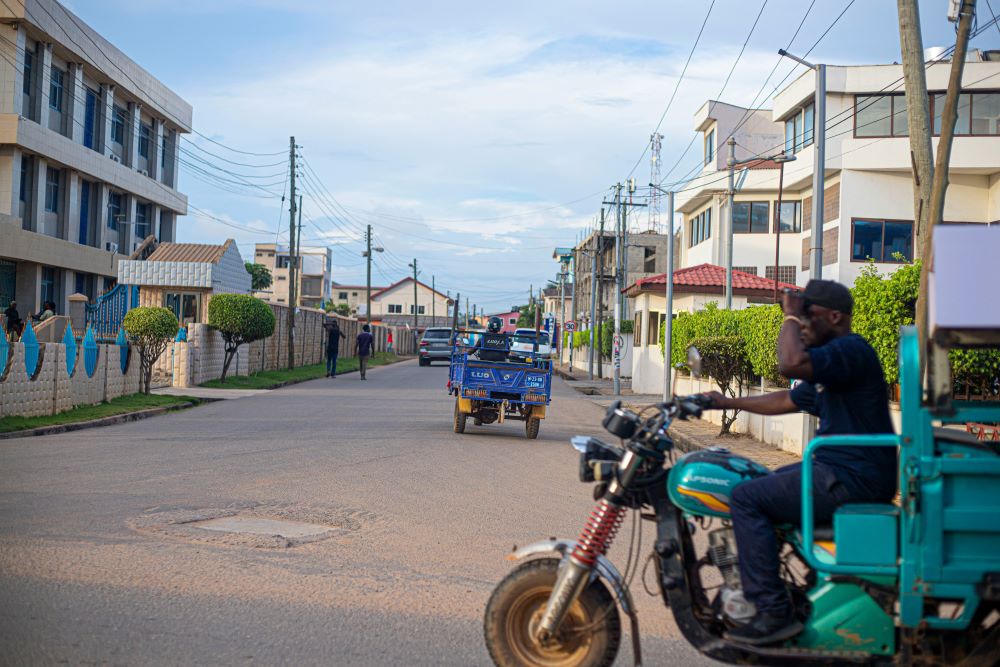
The first investment backs Watu, an asset finance company operating across Africa and Latin America. Lendable has partnered with Watu since 2017, and Watu has become one of the largest financiers of motorbikes and mobile phones across Rwanda, South Africa, Nigeria, Sierra Leone, the Democratic Republic of Congo, Mexico and Brazil. Since 2021 it has expanded into electric mobility, financing e-bikes and e-tuktuks in Uganda, Rwanda, Kenya and Tanzania, with more than 8,000 electric vehicles financed to date. The investment will enable Watu to scale its lease-to-own e-bike business to around 1,000 vehicles per month, supporting rider incomes while reducing emissions.
Shell Foundation and the FCDO say they aim to show how catalytic capital can unlock larger flows of private investment into climate-critical sectors, with benefits for livelihoods, incomes and gender equality.
You may also like
-
The African Local Currency Bond Fund Anchors Angola’s First Sustainability Bond Issuance
-
ALCB Fund Invests in Swami Agri’s Debut Bond, First Agricultural Green Bond in WAEMU
-
Cascador and Sterling Bank Announce $200M SME Credit Backstop Fund, a Catalytic Vehicle to Expand Capital for Growth-Stage Nigerian SMEs
-
MacArthur Foundation lifts its impact investing pool to $750 million, up 50%
-
I&P Ecosystems Secures C3 Funding to Convert African LP Interest into Fund Commitments